This is a US design from 1912, modeled in 1/6000 scale.
Displacement 30,000 tons
Waterline length 780 feet
Six 14 inch guns
Sixteen 6 inch guns
Eight 21 inch submerged torpedo tubes
Oil fired, 27 knots
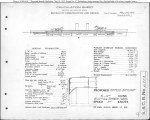
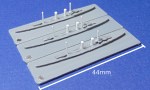
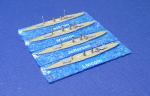

This is a US design from 1912, modeled in 1/6000 scale.
Displacement 30,000 tons
Waterline length 780 feet
Six 14 inch guns
Sixteen 6 inch guns
Eight 21 inch submerged torpedo tubes
Oil fired, 27 knots
This scenario was inspired by the Russian attack on a convoy of iron ore sailing from Sweden to Germany described in “After Jutland“, Chapter 6, pages 90-91. The Russian attack group of destroyers has a close cover force of cruisers and a distant cover force of dreadnoughts. The Germans expect the operation and counter with their own cruiser and dreadnought supporting forces.
Winds WSW at 5 knots. Sea state 2. Visibility 6 NM.
Plots
0-25 minutes
25-50 minutes
50-75 minutes
All
Computer code (described here)


With only two Russian dreadnoughts left to face six relatively intact German dreadnoughts, we called the game. The convoy and most of the German cruisers had been destroyed, but the loss of the Russians dreadnoughts was a high price to pay for meeting the mission objective.
This is a Dutch dreadnought design from 1913, modeled in 1/6000 scale. Various designs were proposed from 1912 through 1914, as described in Warship International No. 4, 1988, No. 1, 1989 and No. 4, 1989. The 1913 quadruple turret design was chosen because it differed the most from contemporary German designs.
Normal displacement 20,700 tons
Length 169.2 meters
Eight 34.3cm L/45 in quadruple turrets
Sixteen 15cm L/50in casemates
Oil fired, 22-23 knots
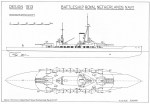


The names were taken from late 19th Century Dutch cruisers.
This alternate history scenario was a confrontation between British and French ships in November 1914. The British were tasked with preventing the return of the French fleet from Oran to Toulon. The French were to get underway from the anchorage at Oran and get past the British.
Player reports:
British
French
Plots of ship movements:
0-30 minutes
30-45 minutes
40-60 minutes
All
Computer code (described here)
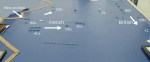


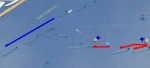
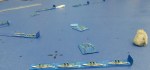

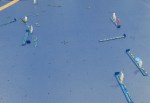

We stopped play after 12 turns (60 minutes of game time) and about 4 hours of real time.
This Friday we played a fictitious naval battle set in the North Sea in 1916. The British attempt to sweep the Heligoland Bight to eliminate German patrols. The Germans are supporting their light forces with heavy ships. The scenario includes ships not actually available in the North Sea at the time.
Winds WSW at 3 knots. Sea state 2. Visibility 5 NM toward the SW, 6 NM toward the NE.
Player reports:
British
German
Plots of ship movements:
0-30 minutes
30-50 minutes
All
Computer code (described here)
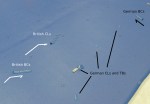


We played for about 4 hours without a decisive result. The British had suffered somewhat more damage. In spite of a lot of torpedo fire from the light cruisers and destroyers, the only two torpedo hits were achieved by the Von der Tann and the Blucher.


You must be logged in to post a comment.