WWI Naval Battle – Bay of Algiers, 1914

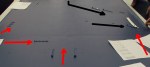
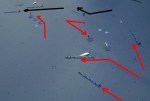
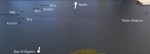
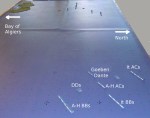
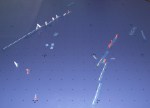
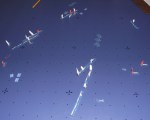
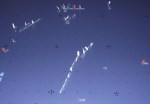
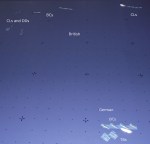
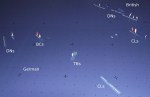
This fleet action is based on the Triple Alliance naval convention of 1913, as described in “The Great War at Sea” by Sondhaus. The plan was for the Italian and Austro-Hungarian fleets and any German ships in the Mediterranean to engage the French Fleet and block the Algerian troop transports. This scenario assumes that the war starts in February 1914, and that the British Mediterranean squadron joins the French.

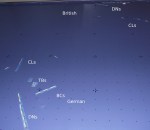
Due to the generally longer ranges of the Triple Alliance guns, the French and British ships were under fire and unable to respond for the first few turns. Both sides had difficulty forming coherent battle lines due to the wide variation in ship speeds and capabilities. The Goeben and Dante Alighieri eventually destroyed the three British battlecruisers. Based on the situation when we quit, the French Algerian troops could be very late arriving in France.

Scale: 1/6000 miniatures, 500 yards/in ground scale.

Rules: Computer code in development.

Visibility 24,000 yards. Wind northwesterly at 6 knots. Seastate 2.

Status at the end of the game: Alg status

Damage output file: Alg-out

Plot of ship movements: Alg-plot

WWI Naval Battle – North Sea January 1915

This fleet action is based on the low point of Grand Fleet numerical superiority over the High Seas Fleet, as described in Massie, Robert K., “Castles of Steel,” Chapter 20, page 372. Based on the results of the Dogger Bank scenario played earlier, the opposing battle cruisers are still under repair.

Scale: 1/6000 miniatures, 500 yards/in ground scale.

Rules: Computer code in development.

Visibility 12,000 yards. Wind southwesterly at 24 knots. Seastate 4.

Status at the end of the game: NS15status

Damage output file: NS15-output

Plot of ship movements:
First 40 minutes NS15plot1-40
40-50 minutes NS15plot40-50
50-60 minutes NS15plot50-60
60-70 minutes NS15plot60-70


WWI Naval Battle – Dogger Bank

This Dogger Bank scenario starts at 7:20 am January 24th, 1915, just after the initial contacts.

Scale: 1/6000 miniatures, 500 yards/in ground scale.

Rules: Computer code in development.

Visibility 22,000 yards. Wind east by north at 10 knots. Seastate 1.

Status at the end of the game: dogger-status

Damage output file: Dogger-out

Plot of ship movements:
First 40 minutes Dogger-plot-1-40 
Last 35 minutes Dogger-plot-40-end

Rather than trying to escape to the southeast, the Germans decide to fight it out. [It would not be much of a game otherwise.] They maneuver to close the range while keeping their guns bearing and avoiding smoke obstruction. Although the gunnery duel is about even, the larger force of British cruisers and destroyers would probably prevent the heavily damaged German battle cruisers from reaching port.

WWI Naval Battle – Horn Reef, November 1914

The portions of the Grand and High Seas fleets that were not involved in the Kattegat battle had their own action at the same time. The British 1st and 4th Battle Squadrons, providing distant cover for the Kattegat force, are engaged by the newer German dreadnoughts steaming north from the Jade (Battle Squadron III and Scouting Group I).

Scale: 1/6000 miniatures, 500 yards/in ground scale.

Rules: Computer code in development.

Visibility 20,000 yards. Wind westerly at 12 knots. Seastate 3.

Status at the end of the game: Sk Horn status

Damage output file: SK-horn-hits

Plot of ship movements: First 35 minutes sk-plot-horn-1-35
Last 35 minutes sk-plot-horn-35-end

Map:

WWI Naval Battle – Kattegat, November 1914

This is the second in a series of hypothetical battles based on the implementation of the strategy suggested by Wolfgang Wegener (“The Naval Strategy of the World War“). For a brief description of the Wegener Thesis, see this article.

After taking the Jutland peninsula, the Germans establish a naval base at Frederikshavn. The British send the battle cruisers remaining operational from the previous battle and a supporting battle squadron into the Kattegat to disrupt German mining efforts.

Scale: 1/6000 miniatures, 500 yards/in ground scale.

Rules: Computer code in development.

Visibility 21,000 yards. Wind westerly at 8 knots. Seastate 2.

Status at the end of the game: Kat-status

Damage output file: Kat-output

Plot of ship movements: Kat-plot

Map: Kattegat – Skagen 10NM Grid