1/6000 scale WWI ships by Figurehead miniatures.
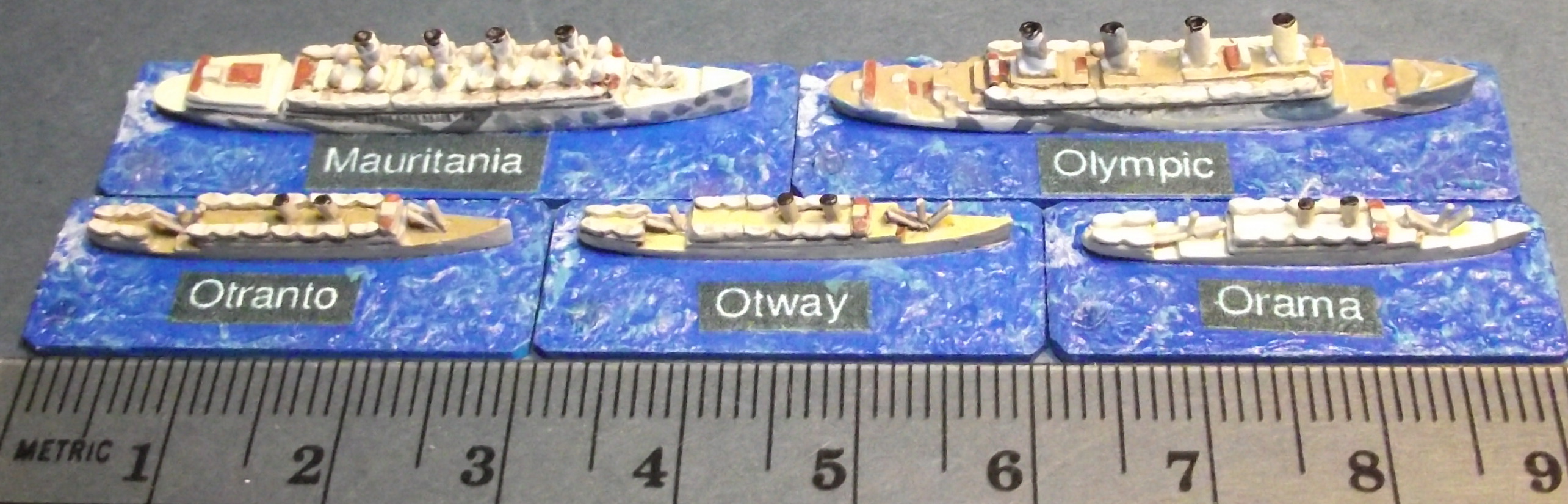

1/6000 scale WWI ships by Figurehead miniatures.
On March 22nd the local HMGS-South group played a Starship Troopers game.
Three scientists required evacuation by Mobile Infantry when their lab was attacked by the Arachnids. The initial defense consisted of robots and mercenaries which were nearly wiped out by the time the infantry arrived in two dropships.



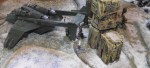
The scientists were rescued, at the cost of one dropship and most of the troopers, mercs and robots.
This fictional scenario was designed to test new destroyer/torpedo boat guide algorithms. For each fleet, two ships can be designated as guides. DD/TB units can then be ordered to take station on those guides instead of being given normal movement orders.
Visibility was 24,000 yards. Wind was north-westerly at 10 knots and the seastate was 2.
Status at the end of the game: Fr-US end status
Damage output summary: Output 19MAR2014
Plot: Fr-US plot
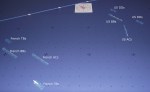

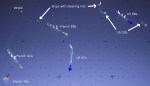
When we quit, damage to the battleships was about even, but the French armored cruisers and torpedo boats had suffered much more damage than those of the US. The small French TBs were sunk primarily by fire from the 5 inch guns of the US BBs. There were no successful torpedo attacks, but the US AC Montana was accidentally torpedoed by US DDs.
This fictional scenario was designed to test revised torpedo algorithms and also to experiment with several tactical concepts mentioned in Friedman, Naval Weapons of World War One, Chapter I:1, Gun Tactics. Fleets of 16 battleships (as envisioned by Plunkett) meet on opposite courses (addressed in Admiral Callaghan’s ‘Instructions for the Conduct of the Fleet in Action’ of October 1913). The order of battle assumes that the British and German battlecruisers and the British 5th Battle Squadron are engaged elsewhere. The 12in gunned British battleships were sent to cover Tershellling in the event the German fleet attempted to return to port by that route. The German pre-dreadnoughts were left in port. HMS Audacious was not lost in 1914.
Visibility was 11,000 to 12,000 yards, with the best visibility looking toward the east. Wind was westerly at 10 knots and the seastate was 3.
Status at the end of the game: IOt8a
Damage output summary: Output 5MAR2014
Plots:
First 20 minutes: 1916 Plot 1-20
20 to 25 minutes: 1916 Plot 20-25
25 to 35 minutes: 1916 Plot 25-35
Complete 35 minute plot: 1916 Plot


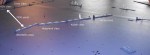

Two British armoured cruisers and one light cruiser are sunk, but the German battleships take much more damage than the British. With the battle still in doubt, we had to call it a day.
In this fictional battle using the WWI naval game program, the Russian Baltic fleet sails to attack Kiel in August 1914. The game is continued from the earlier maneuvers posted here. Since the torpedo algorithms were significantly revised, the game was backed up several minutes to restart prior to any significant action.
The plot was complicated, so it was divided into two 20 minute plots:
Status at the end of the game: Fehmarn8 status
Damage output summary: Output 2-26-2014




You must be logged in to post a comment.