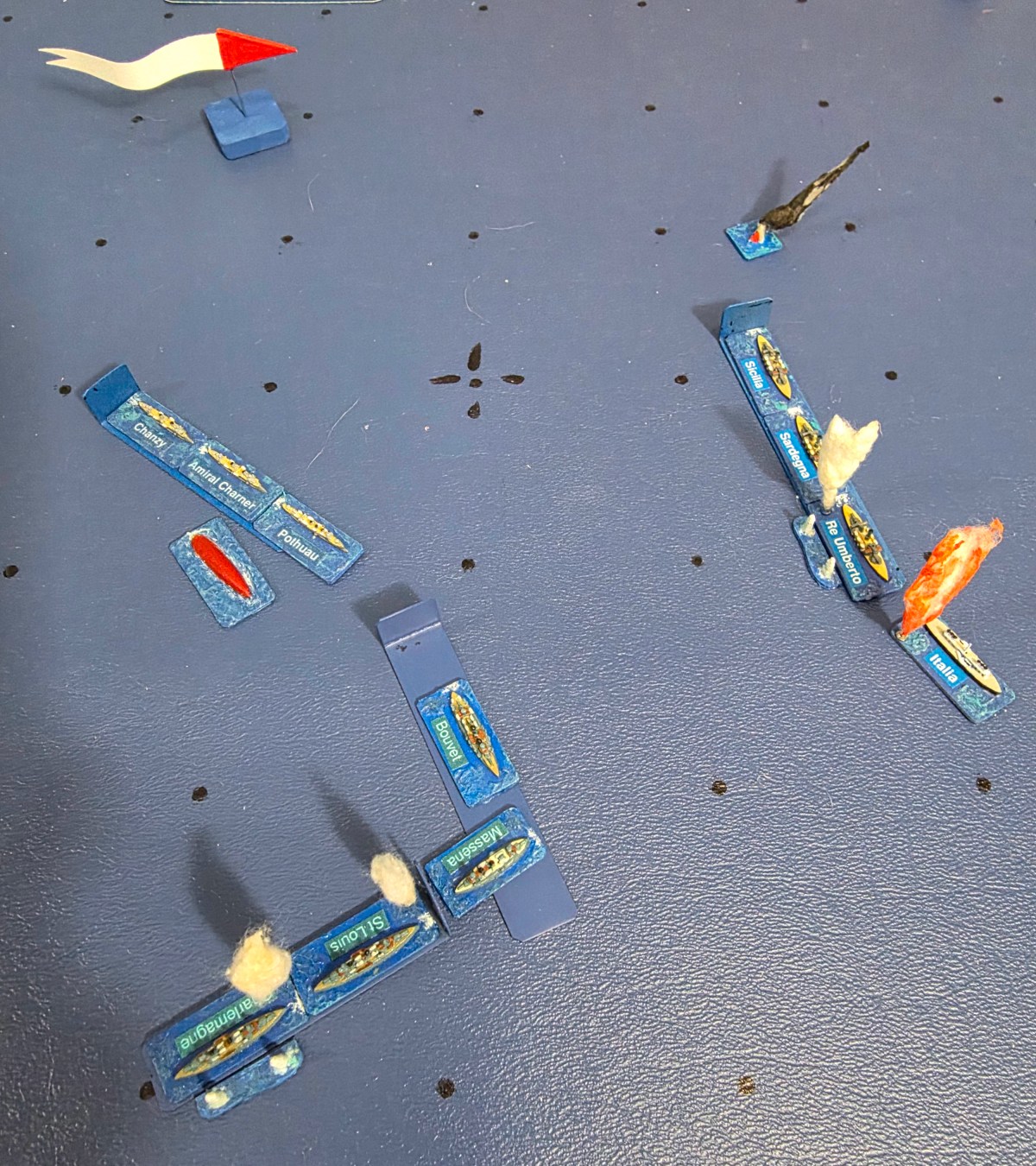
Naval Battle of Tunis 1901

This scenario was inspired by an Admiral of the Fleet game run by the Seekrieg Admiralty at the HURRICON 2025 game convention. Photos of that convention game are in this Google photo album (about halfway down the page).

The description of the scenario is from the HURRICON events guide:
“After the French acquisition of Tunis in 1881, Italian aspirations regarding Tripoli were generally recognized by the Great Powers but tensions between the two countries eventually led to armed conflict in North Africa when Italy began a naval blockade of Tunis. In May of 1901, Italian battleships and cruisers meet their French counterparts in the Gulf of Tunis …”

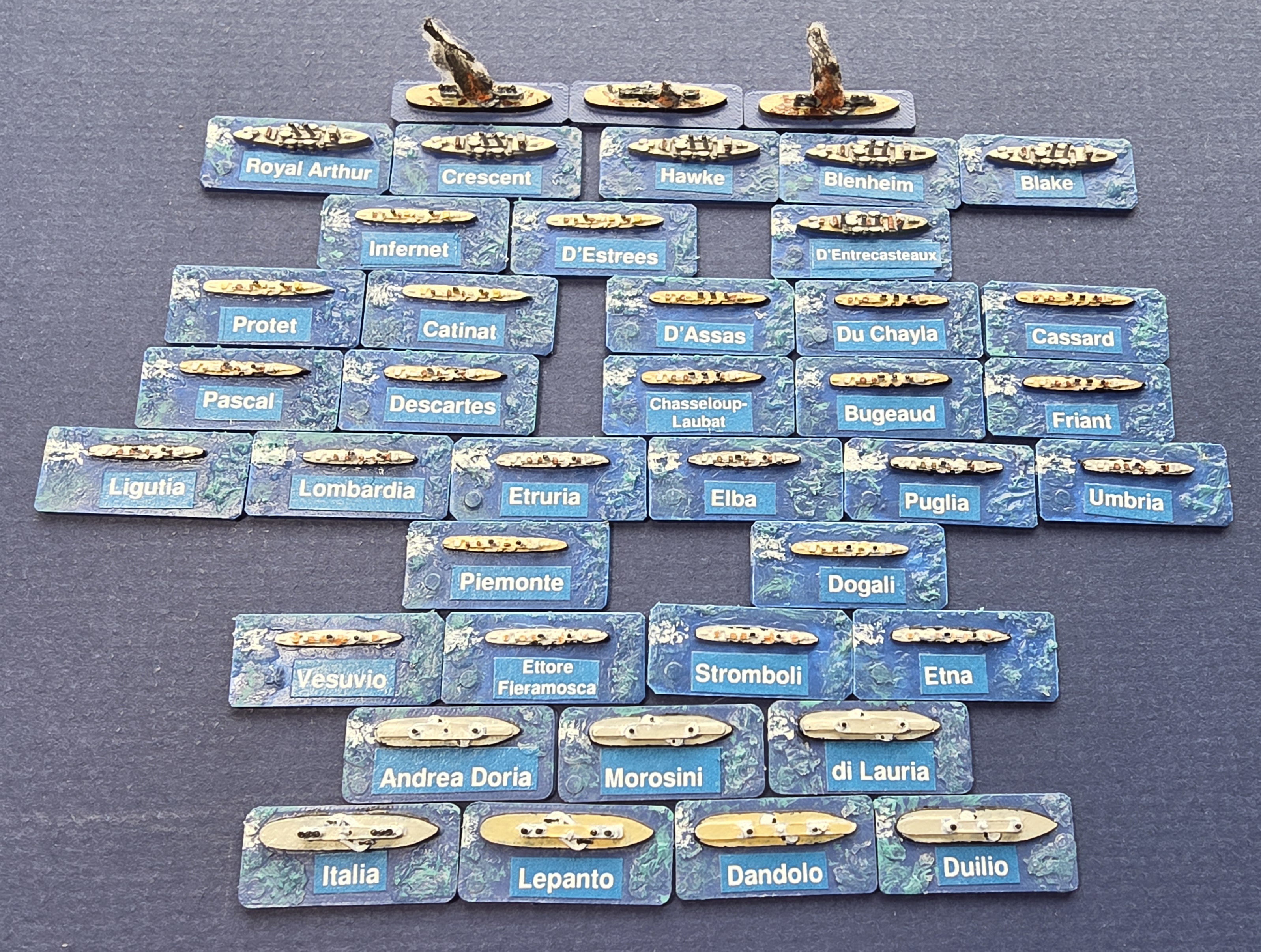
While the French battleships, armored cruisers and their weapons were already included in the game codes, it was necessary to add the Friant class protected cruisers and all of the Italian ships and weapons. Code revisions were required to accommodate the long reload times of the Italian heavy guns. None of the new ships were available in the Figurehead 1:6000 scale line, so they were created by conversions or 3D printing. Small destroyer units (not present in the AOTF game) were added to each fleet.

Both sides were run by the code‘s automation algorithms.

The orders of battle are listed in the narrative file:


Photo album (Google)

Plots:
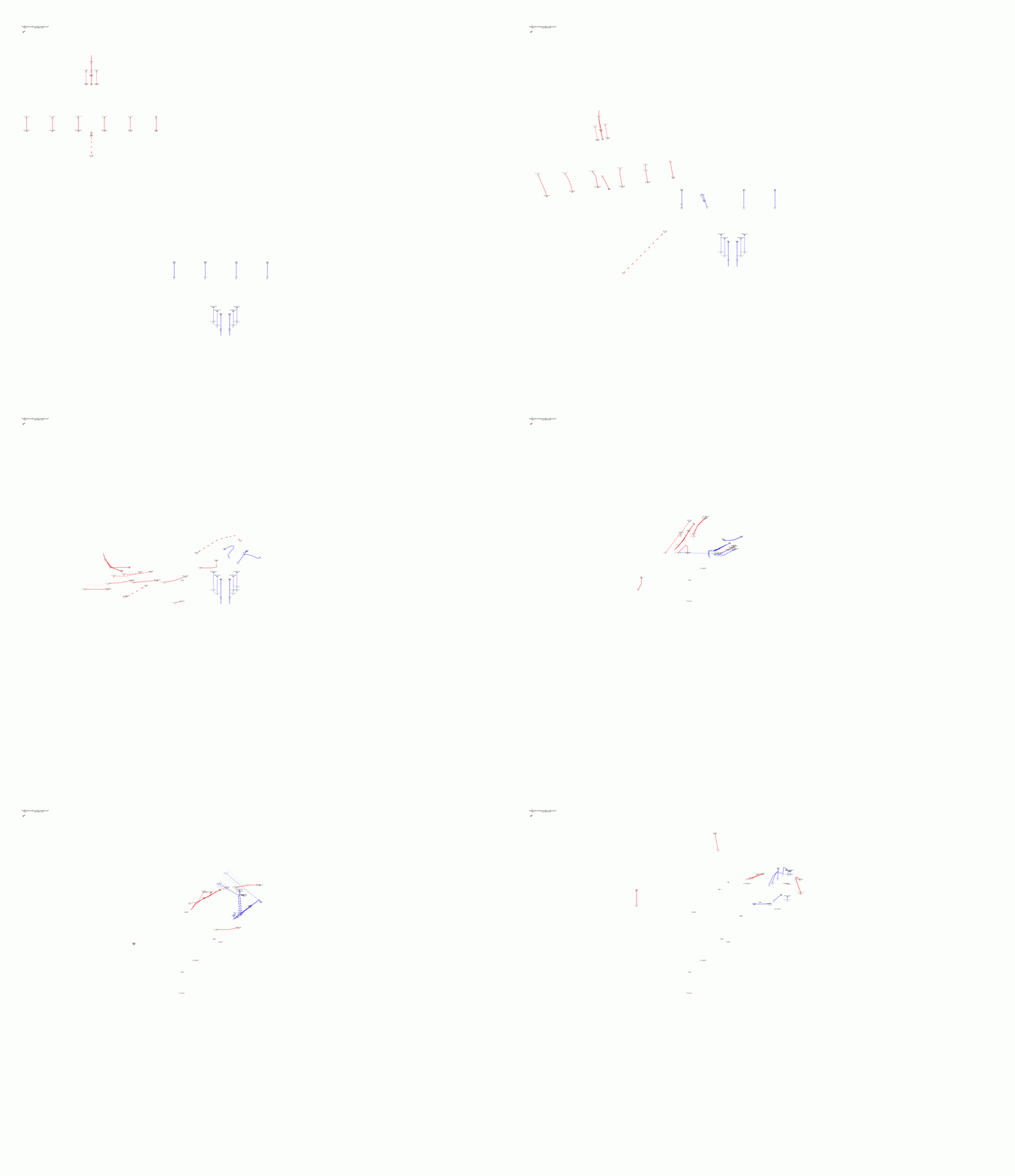
Full scenario plot:

Simplified plot of battleship movements:


Status at the end of the game:

Gunnery Logs:

Hit Logs:

Comments:
Although neither of the computer-controlled forces had yet chosen to break off the action, the loss of three Italian battleships and the French fleet’s attempt to open the range provided a reasonable opportunity to end the battle after a hour and twenty minutes.

Italian losses were much greater than French, primarily due to the ineffectiveness of the 17 inch guns of the two leading Italian battleships. These guns did not make any hits, with their long reload time (8 minutes) and consequent inability to achieve a good fire control solution. The two ships (Italia, Lepanto) fired only 9 and 8 heavy shells, respectively, so even one hit would have been a good hit rate. Putting the Re Umberto class ships in the van might have had better results, but their 13.5in/30 guns had a maximum rate of fire of only 0.3 rounds per minute, compared to 1 round per minute for the 305mm guns of the French battleships.

The destroyers with their short range torpedoes were of little use in a daylight action. The code algorithms kept them on the disengaged side so that they did not take many hits.

1/6000 Naval – Late 19th Century

The bottom two rows are 3D printed Italian battleships. The top row wreck markers are made from failed 3D prints, resulting from a two year hiatus in using the printer. The Italian and French cruisers are crude conversions of Figurehead models. The British Edgar and Blake class are Figurehead models, with only slight changes to reflect the modified armament of HMS Crescent and Royal Arthur.

Battle of Cape Shoppek

This 1918 scenario is based on the following:
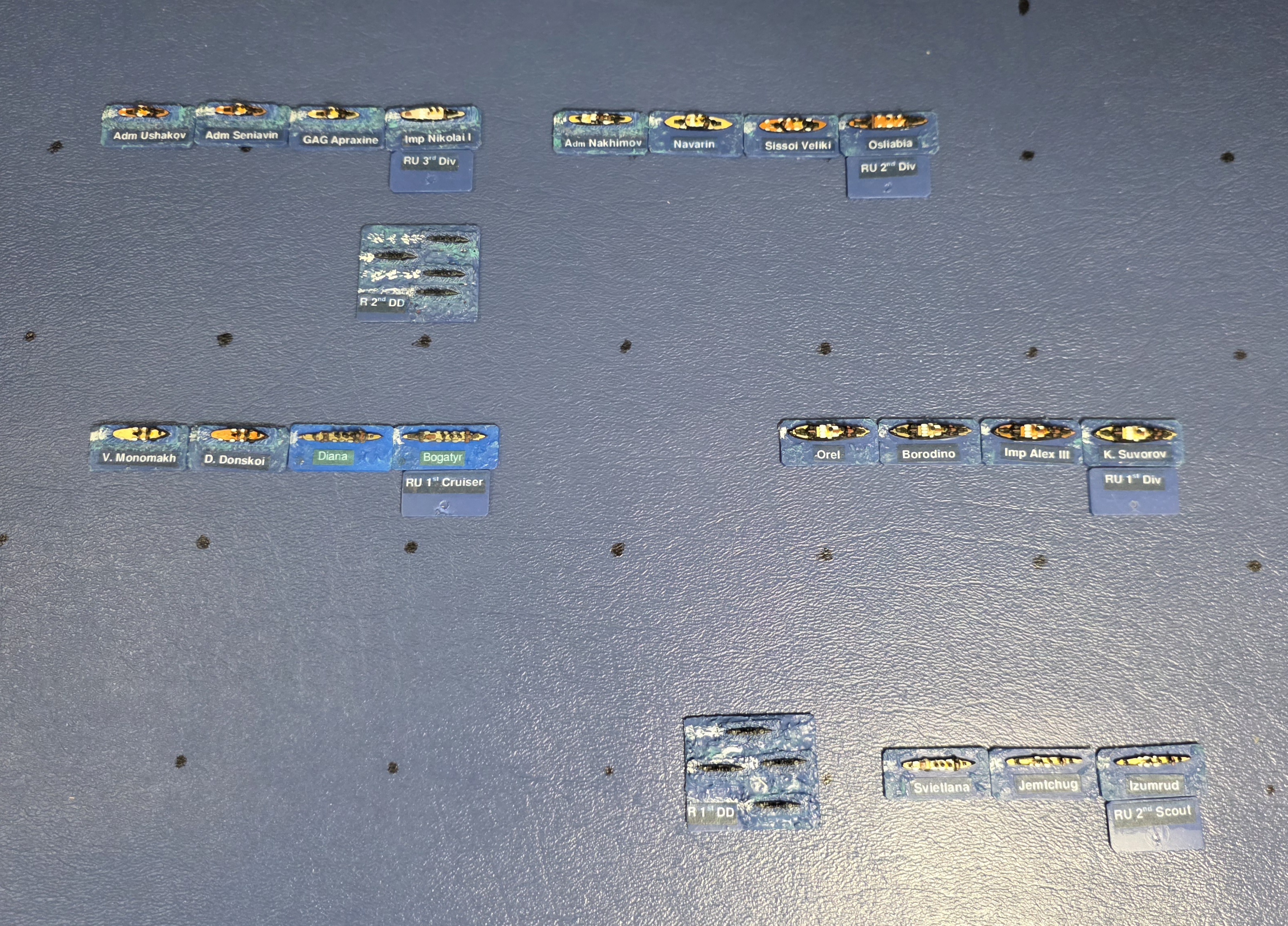
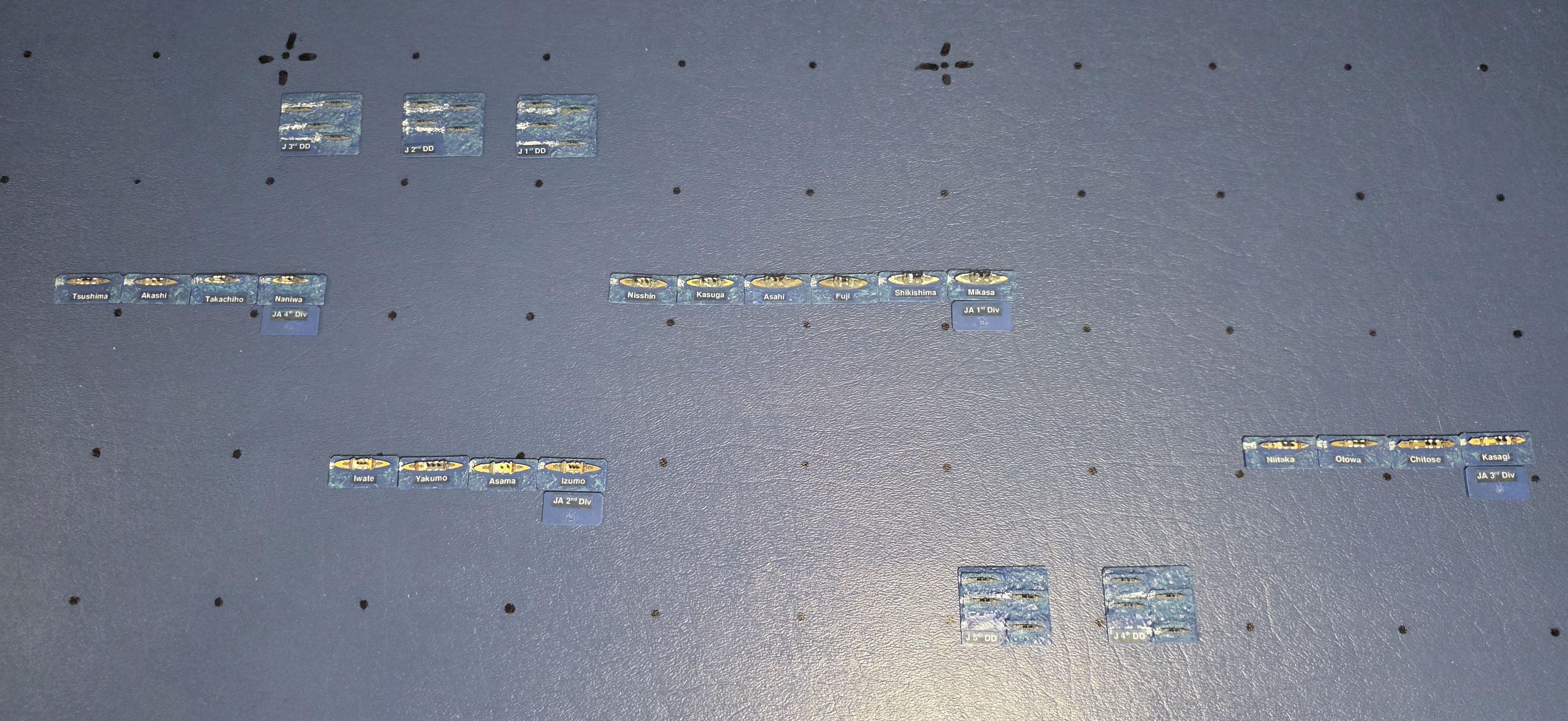
1. The Russo-Japanese War of 1904-1905 ended in a stalemate and the issue of who would dominate north-east Asia remains unresolved.
2. The First World War and Russian revolution have not yet occurred.
3. The naval building programs delayed or curtailed in 1914 have continued.

The Russian side was played by a remote gamer using text output files, plots of contact reports and photos of the table. The Japanese side was run by the code‘s AI.

The Orel class Russian dreadnoughts used in the game are based on the 1917 design described here:
https://ncc1717.com/2019/01/04/1-6000-naval-never-built-ships/

Russian Player briefing:

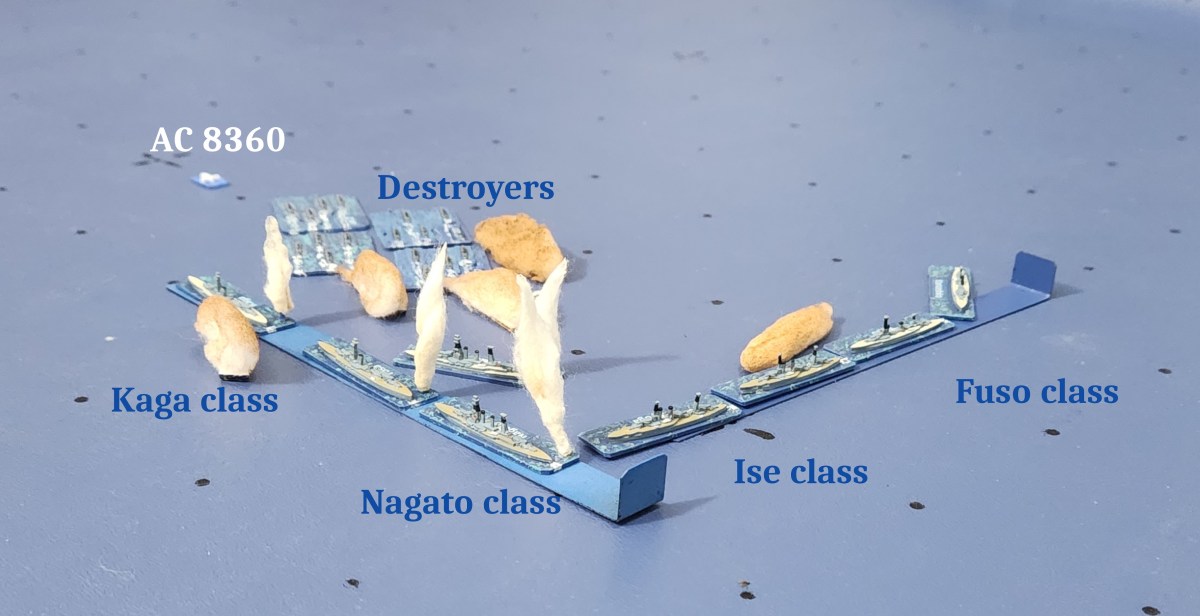
Based on their actions in the war of 1904, it is expected that Japanese naval forces will attempt to gain control of the Yellow Sea to allow troop landings somewhere on the Korea Bay. Attacks will likely precede a declaration of war. Although significant Japanese naval units are reported in the Pescadores Islands, the newest ships are believed to have remained at Sasebo. These may include battleships of the Fuso, Ise, Nagato or Kaga classes.

You are ordered to sweep the area south of Cape Shantung and Cape Shoppek. If the Japanese fleet is discovered it should be assumed that hostilities have begun, and that it is your duty and privilege to engage and destroy it.

The orders of battle are listed in the narrative file:


Photo album (Google):https://photos.app.goo.gl/ss8J54zJYH8Ejmmz8

Plots:
This animated plot shows the movements in 10 minute increments:

Full scenario plot:

Plot of movements and reports to 1100 hours as seen by the Russian player:

Simplified plot of battleship movements and all torpedo tracks:

Plot of action from 1100 to 1200 hours:

Plot of action from 1200 to 1245 hours:


Status at the end of the game:

Gunnery Logs:

Hit Logs:

Comments:
The Russian force did better in the scouting battle, due to the heavier armament of the light cruisers, aggressive tactics, and the use of seaplanes. The Japanese cruiser screen was driven back and unable to locate the Russian battleline. As a result, the Japanese force did not deploy from its cruising formation until the battleships were engaged.

In the early part of the battleship engagement the Russian fire was hampered by smoke from having the upwind position. This improved later after a slight turn to a more easterly course.

Both sides sent destroyers to attack the opposite battlelines at about the same time. The Japanese flotillas were better positioned ahead and able to launch torpedoes at a greater distance (and take less damage). The Russian flotillas eventually launched, but suffered more from close range secondary fire.

The scenario was fairly evenly matched in terms of damage, with each side having three of eight battleships surviving (Tosa is considered as lost since, with only 3% flotation and being ~400 miles from a safe haven, she would need to be scuttled). The remaining Japanese battleships were in somewhat better condition, but lower on ammunition.

1/6000 Naval – Assorted Vessels

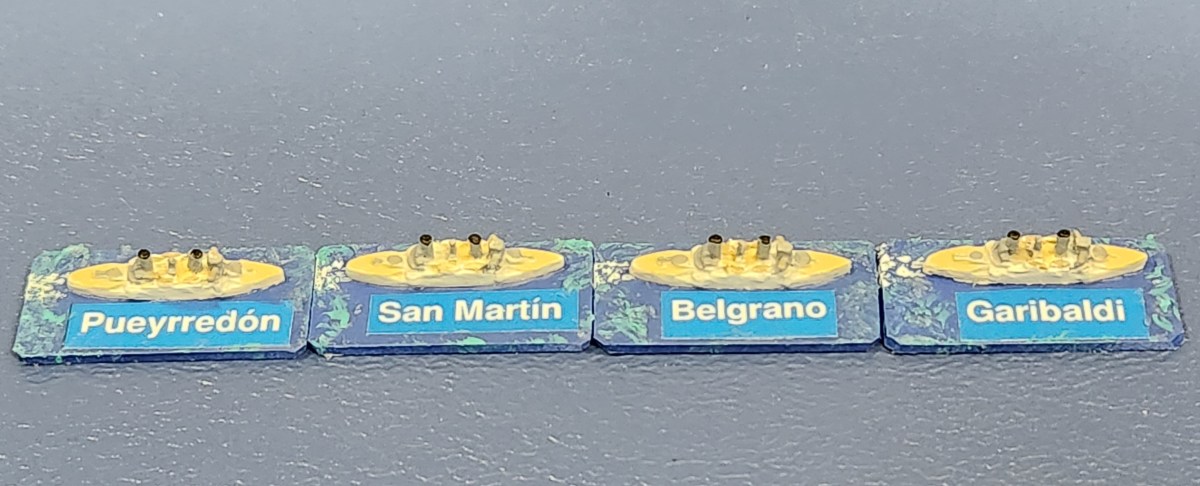
Here are a few 1/6000 scale ship to fill gaps in the fleets. All are Figurehead.

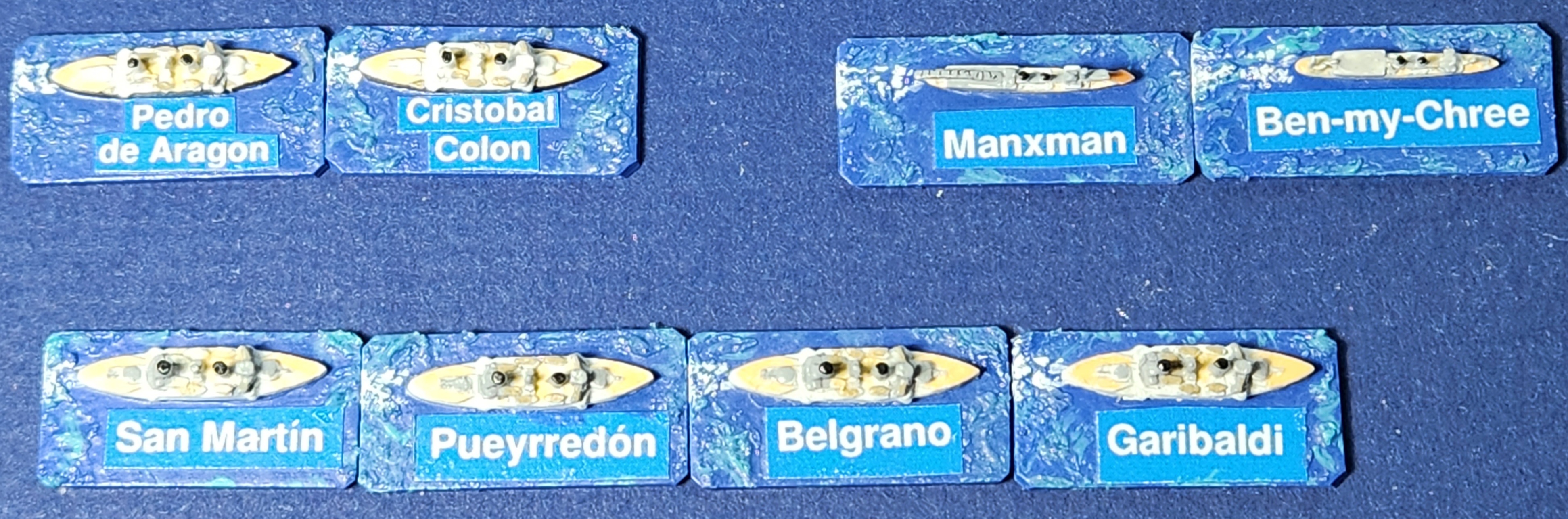
Garibaldi class armored cruisers built by Italy and sold to Argentina and Spain (Pedro de Aragon was cancelled) and British seaplane carriers.

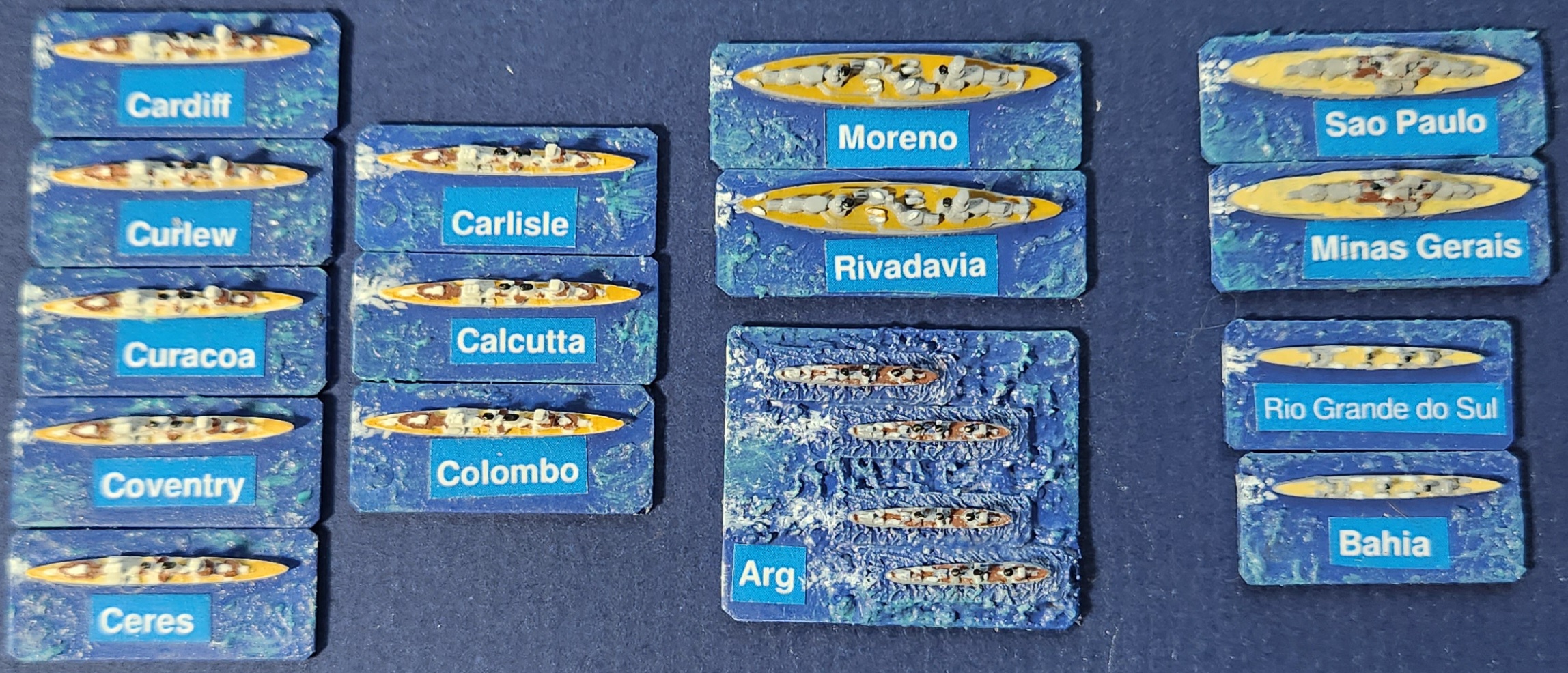
Late war British Ceres and Capetown class light cruisers, and WW1 ships from the Figurehead Argentine and Brazilian fleet packs.

WW1 Naval – Battle of Durazzo

This scenario assumes that the Austrian fleet at Pola sortied in December 1915 to challenge the evacuation of Serbian troops from the Albanian port of Durazzo, and that the Italian fleet with French support sortied to oppose it. For a detailed description of the historical situation and events, see Paul G. Halpern, “The Naval War in the Mediterranean 1914-1918,” Chapter 6.

The Allied side was played by a remote gamer using text output files, plots of contact reports and photos of the table. The Austrian side was run by the code‘s AI.

Player briefing:

The orders of battle are listed in the narrative file:


Photos:

Due to the circling nature of the battle, an entire battle plot is difficult to read. This animated plot shows the movements in 10 minute increments:


Animated plot showing target lines of primary batteries. The plot includes only the four Austrian dreadnoughts and the four Italian dreadnoughts.


Status at the end of the game:

Gunnery Logs:

Hit Logs:

Shell Diagnostics:
This table gives the performance of the large caliber shells in the battle.

Conclusion:
After quite a long game the Italian commander decided to give up the chase of the retreating Austrians. With the exception of three remaining the French dreadnoughts, all the battleships on both sides were low on or out of ammunition. The losses and battle damage were roughly equal. Since it is clear that the evacuation would not have been disrupted, the result is a strategic victory for the Allies. Vittoria!