
In June 1914, units of the British fleet were in the Baltic Sea. A division of the 2nd Battle Squadron (four King George V class dreadnoughts) commanded by Vice Admiral Sir George Warrender and three light cruisers were in Kiel, Germany between June 23rd and June 30th. The 1st Battlecruiser Squadron commanded by Rear Admiral Sir David Beatty visited Riga, Revel and Kronstadt, and was in Kronstadt on the 28th when the assassination of Austrian Archduke Ferdinand occurred.
This hypothetical engagement assumes (1) that the Austrian government promptly responded to the assassination with a declaration of war on Serbia, (2) that a state of war existed between Britain and Germany on July 1st, and (3) that the Germans sortied their available ships to intercept the British squadrons before they could exit the Baltic.
The composition of the German force is extrapolated from the ships mentioned in von Hase’s description of the Kiel visit. British light cruisers are assumed to have also accompanied the 1st BCS.
After leaving Kiel, Warrender cruises in the Fehmarn Belt waiting for Beatty to arrive from the east. The 1st BCS leaves Kronstadt on the 29th in order to reach the Fehmarn Belt on July 1st. Beatty is still a Rear Admiral at this point and Warrender will be in overall command when the two forces join.
References:
George M. Nekrasov, “Expendable Glory: Russian Battleship in the Baltic, 1915-1917” [for the presence of the 1st BCS at Kronstadt on July 28th]
Commander Georg von Hase, “Kiel & Jutland” [for details of the Kiel visit and the ships present]
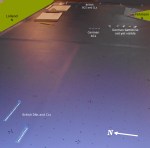
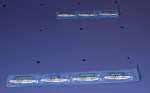
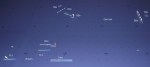
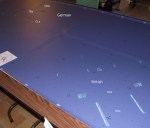
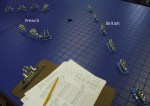
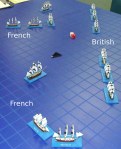
Scale: 1/6000 miniatures, 500 yards/in ground scale.
Rules: Computer code in development.
Visibility 16,000 yards. Wind northwesterly at 14 knots. Seastate 2.
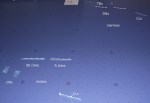
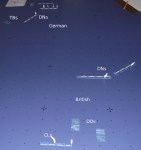
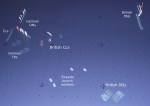
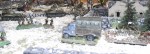
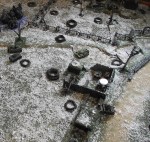
Status at the end of the game: Final status belt3
Damage output file: Belt3 output
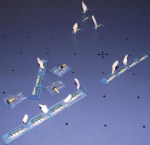
Plot: belt3-plot



















You must be logged in to post a comment.