
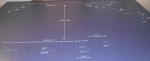
Theoretical deployment of the Grand Fleet in accordance with the Grand Fleet Battle Orders, page 41, Dec 1915 (Volume III Jutland, from Clash of Arms). Page 40 states that “the order of the High Seas Fleet is that shewn in the O.X.O. papers.” What the ‘O.X.O. papers’ were is unknown.
There are fewer German flotillas than the diagram, but Jellicoe overstated the number of boats that might be present. He expected that his destroyers would be outnumbered by as much as 2 to 1 (GFBO Destroyer Addendum page 1, 1/10/15). Also left out are the German “4th and 5th Battle Squadrons” which are on the diagram on the disengaged side of the HSF. These were older pre-dreadnoughts that probably never sortied with the HSF in the North Sea.
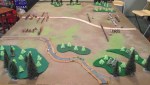
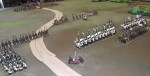
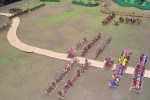
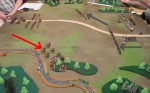
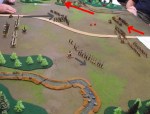
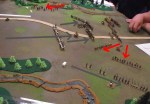
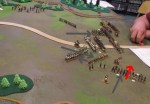
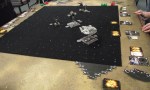
The ground scale is 1 inch = 500 yards or 1/18000. The ships are 1/6000 scale Figurehead miniatures and as a result the spacing of the ships is about 1/3 of what it should be.













 ncc1717.com
You must be logged in to post a comment.